
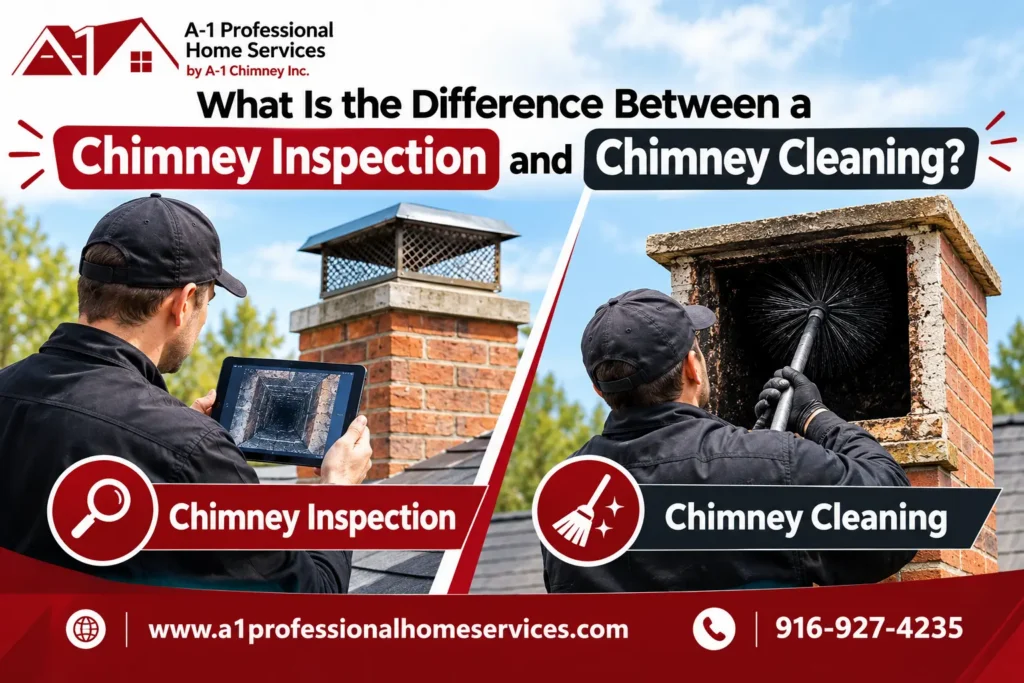
What Is the Difference Between a Chimney Inspection and a Chimney Cleaning?
Most people believe that chimney cleaning is synonymous with chimney inspection. But Chimney inspection and chimney cleaning are two different services. Cleaning removes soot, creosote, ash, and other buildup from the chimney. An inspection looks at the condition of the chimney and its components to find problems that cleaning alone may not catch.
For Sacramento homeowners, understanding this difference is important because a chimney can be clean but still have cracks, damaged components, improper clearances, obstructions, or other problems that cleaning alone will not identify.
If you are searching for fireplace chimney cleaning in Sacramento, it’s important to understand what cleaning involves, when an inspection is necessary, and whether you may need both services.
Chimney Inspection vs. Chimney Cleaning: What Is the Difference?
The easiest way to understand the difference is to look at the purpose of each service.
| Service | Main Purpose | What it Involves |
| Chimney inspection | Evaluate the condition and safety | Checks the chimney structure, flue, accessible components, deposits, obstructions, and other potential problems |
| Chimney cleaning | Remove accumulated deposits | Removes soot, creosote, ash, and other buildup or debris |
| Inspection and cleaning | Check condition and remove buildup | Identifies potential problems and removes deposits when cleaning is necessary |
| NOTE: An annual inspection does not imply that your chimney needs to be cleaned every year. Cleaning should depend on the actual condition of the system and the amount of deposits present. |
What Does a Chimney Inspection Actually Check?
A professional chimney inspection is more than looking into the fireplace or shining a light up the flue. The level of inspection depends on the condition of the chimney, how it is used, any changes made to the system, and the reason for the inspection.
- Purpose: Inspecting the fireplace, chimney, and heating appliance for visible damage and combustible deposits for safe operation.
- Routine Inspection: Details on easily accessible parts of the system to identify safety hazards or buildup.
- Detailed Inspection: Recommended in case of structural damage, fuel changes, or problems flagged during a past inspection.
What Can an Inspection Find That Cleaning Cannot?
A chimney can be relatively clean while still having a serious problem. An inspection may identify:
- Cracks in masonry or chimney components
- Damaged or deteriorated flue components
- Obstructions inside the chimney
- Improper clearances from combustible materials
- Evidence of water intrusion
- Problems with accessible chimney connections
- Conditions that could affect proper venting
- Damage following a chimney fire
- Other visible or accessible conditions that may affect safe operation
Some chimney problems cannot be identified simply by removing soot and creosote. For example, a damaged flue or structural problem may remain even after the chimney has been thoroughly cleaned
The EPA recommends professional inspection and maintenance because problems with a chimney or venting system can create conditions that allow smoke and combustion gases to enter the home.
This is why the statement that a chimney is clean should not automatically be interpreted as meaning that the chimney is safe.
| Need Help With Your Chimney? Call (916)-927-4235 |
What Does Chimney Cleaning Include?
The main purpose of chimney cleaning is to remove accumulated deposits and debris from the chimney and related areas. Depending on the fireplace and chimney system, deposits may include soot, creosote, ash, loose debris, animal nesting material, and other obstructions.
Creosote deserves particular attention because it’s combustible and can accumulate inside chimneys used with wood-burning appliances.
- Professional cleaning generally involves accessing the chimney and using appropriate brushes, mechanical equipment, and specialized tools to remove deposits.
- The right cleaning method depends on the chimney configuration and the type and condition of the buildup. For example, loose soot is different from hard or glazed creosote, so the cleaning approach may also vary.
The Chimney Safety Institute of America explains that chemical cleaning products should not be considered a replacement for professional inspection and mechanical chimney cleaning.
Chimney Inspection and Cleaning: A Simple Homeowner Checklist
As mentioned above, the two are different services. Here is why and when you should know which service to opt for:
| Situation | Inspection | Cleaning |
| Annual routine maintenance | Recommended | As needed |
| Heavy creosote buildup | Yes | Yes |
| New appliance installation | May require additional evaluation | As needed |
| Smoke entering the home | Important | Only if deposits are part of the problem |
| Suspected chimney damage | Important | Not a substitute for repair |
| Long period without maintenance | Recommended | Based on the condition |
| Recent chimney fire | Professional evaluation needed | Based on professional assessment |
| Visible debris or obstruction | Recommended | May be necessary |
| Frequent fireplace use | Regular inspection recommended | Based on deposit accumulation |
How Often Should a Chimney Be Inspected?
The Chimney Safety Institute of America recommends having chimneys, fireplaces, and vents inspected at least once a year. The inspection looks for problems such as damage, deposits, and improper clearances. Cleaning, maintenance, or repairs can then be performed when needed.
However, the appropriate inspection frequency can depend on how the system is used and whether conditions have changed.
A professional evaluation may be particularly important when:
- You have recently bought a home with an existing fireplace.
- The chimney has not been inspected in quite some time.
- The fireplace has been unused for a long time.
- You have recently replaced or installed an appliance.
- The fuel type used has changed.
- Smoke is entering the home suddenly.
- Unusual odors suddenly appear
- You detect an obstruction.
- The chimney has experienced a fire recently
- Visible damage is observed.
- Fireplace performance has changed.
| The key point is simple: Annual inspection is a maintenance recommendation, while additional inspections are recommended whenever circumstances or symptoms imply a potential problem. |
What to Expect From a Professional Chimney Service
- Thorough Deposit Removal
- Visual Documentation
- Clear Repair Recommendations:
- Defined Inspection Area & Level:
- Clear Scope of Service:
- Transparent Pricing:
- Component Evaluation
| Ask Your Chimney Professional:
“What exactly will you inspect, what exactly will you clean, and what will you show me if you find a problem?” |
Common Queries From Our Clients
1. Can I clean my chimney myself?
Some of the basic maintenance can be done by yourself, such as removing ash from the firebox. But chimney cleaning is more involved than that, and most times professional intervention is recommended. If you are unsure about the chimney’s condition or have not had it professionally maintained, a professional inspection and cleaning may be the safer choice.
2. Should I get my chimney inspected before buying a home?
Yes, it is recommended to get your chimney inspected when buying a new property in order to know about the maintenance history of the fireplace and the chimney. An inspection is recommended, as it can identify accessible issues that need repair, maintenance, or evaluation. Also, this service offers a better understanding of the condition of your chimney instead of simply assuming that you can use your fireplace.
3. Is chimney cleaning necessary if I rarely use my fireplace?
No, infrequent use does not imply that you do not require cleaning or inspection. Basically, the chimney can develop issues related to heavy fireplace use, deterioration, obstructions, or other related conditions. However, deposits tend to accumulate slowly and eventually, even when the chimney is not used, thus affecting the overall condition. Here, regular inspections can make all the difference in being able to detect if you need cleaning or not.
What should I do if smoke comes into my home from the fireplace?
Smoke entering the home should not simply be treated as a cleaning issue. It may indicate a draft, venting, obstruction, chimney, or appliance problem. EPA guidance recommends stopping use of the appliance and contacting a professional when smoke is entering the home.
| For Professional Chimney Inspection and Cleaning in Sacramento, Call (916)-927-4235 |
Takeaway
Chimney cleaning and inspection are two very different forms of service and should be applied when and where required. However, it’s important to understand the main differences between the two.
Chimney cleaning removes accumulated deposits and debris, while chimney inspection evaluates the condition and safety of the chimney system.
Most of the time, the perfect service depends on the condition of your chimney, maintenance history, usage, and signs of potential issues. However, both services, inspection and cleaning, go hand in hand and are required for the optimum functioning of your fireplace.
Keep Your Chimney Safe With A-1 Professional Home Services
Not sure whether your chimney needs an inspection, cleaning, or both? A-1 Professional Home Services can check your chimney, identify potential problems, and clean away soot, creosote, and other buildup when needed.
With more than 25 years of experience A-1 Professional Home Services is a reputed name when it comes to offering the best quality services for your stove, fireplace, chimneys, dryer vents, and more.
Our team is background-checked, fully insured, and trained to NFPA standards and our services involve accurate inspections, high-quality repairs, and complete installations at the best prices.
We can safely handle:
- Fireplace Chimney Cleaning in Sacramento
- Chimney Cleaning Service in Sacramento
- Chimney inspection service in Sacramento
- Fireplace Chimney Repair in Sacramento
Call (916)-927-4235 to schedule your chimney service.